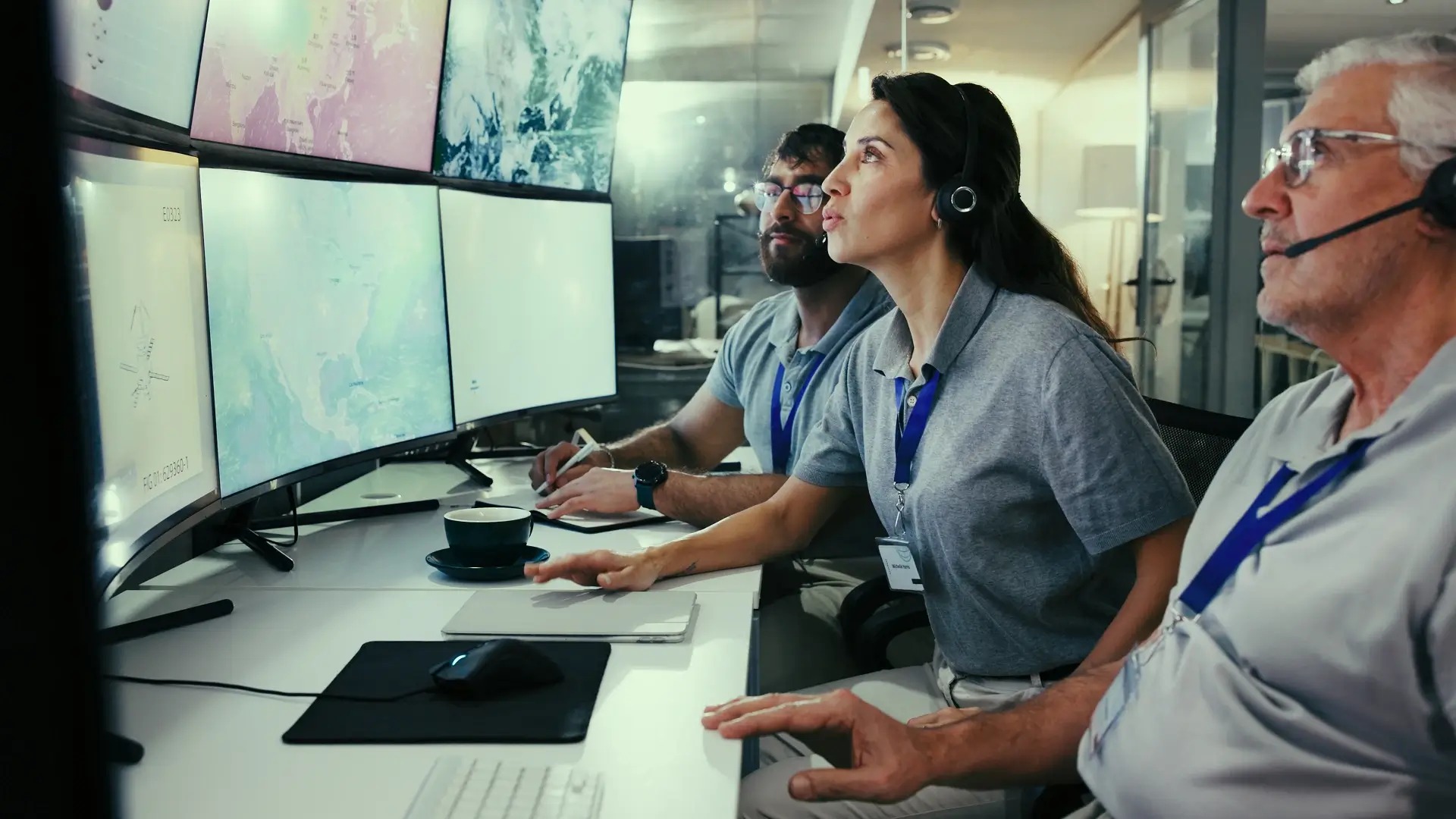
Every security company has dealt with security guard staffing shortages in some form.
A guard calls off before a shift, or simply does not show up. A customer suddenly needs additional coverage, an event requires more personnel than you have available, or a fire watch comes in and needs to be staffed for days or weeks. Either way, the customer still expects the coverage you committed to providing.
I have worked across the private security industry, from the field through supervision, account management, branch management and business development. Staffing has always been one of the hardest operational problems to solve because there is rarely a simple fix when a gap appears.
You can ask someone to stay beyond their shift, call people who are supposed to be off or put someone into overtime. In some cases, you end up pulling a field supervisor away from their own work just to keep a post covered. None of those options is particularly sustainable.
You can't eliminate staffing gaps entirely. In private security, call-offs, turnover and unexpected requirements are going to happen, so the more useful question is whether you have enough contingency built into your operation to deal with them when they do.
When security guard staffing shortages hit, most companies fall back on overtime, off-duty call-ins or moving people between sites, which gets expensive when gaps are frequent. A more reliable option is to arrange subcontracted scheduled security services in advance: security personnel booked for a defined requirement, location and period, who can cover call-offs, events, fire watch or temporary posts.
Why security guard staffing shortages become coverage problems
Customers have a rate they are willing to pay. That bill rate affects what the security provider can pay its people. Rate increases generally happen at defined points in the customer relationship, while wages, recruitment pressure and employee expectations continue to move.
That is one of the main reasons turnover is such a familiar problem across the industry. A UC Berkeley Labor Center report found that annual turnover in the US security industry reached 89% in 2024, against a 66% average across the private sector. High turnover creates a second problem, which is capacity.
If you have a limited roster and two people call off, your operations team has to start moving pieces around. You may need to ask existing personnel to extend their shifts, someone who has already worked may need to come back, or another site may have to give up a resource. Meanwhile, overtime starts eating into the margin on the contract.
One misconception I hear is that security companies have personnel sitting around waiting for a shift. Usually, they do not. Someone might technically be available because they are not scheduled that day, but that does not mean they want to give up a day off or return after already working a shift.
Not every coverage gap needs another permanent hire
Parts of a security contract absolutely belong with your permanent team, but there are plenty of situations where temporary or subcontracted coverage makes more sense. Depending on the need, scheduled coverage could mean several hours, a full shift, recurring patrols or temporary coverage over several weeks.
The strongest use cases are the jobs that sit outside the predictable day-to-day requirements of the core contract.
Call-off and shift backfill
The most obvious use case is a last-minute gap from a security guard call-off. If someone calls off and your internal roster cannot absorb the shift, temporary coverage gives you another route before you start pulling supervisors away from their jobs or loading additional overtime onto your team.
Event security
Events can create enormous short-term staffing requirements. Here in Las Vegas, large events are a normal part of security work. Major conventions, sporting events and other large gatherings can require dozens or even hundreds of security personnel per shift, and it is normal for multiple security companies to be involved.
Event plans also change: extra requirements appear, people call off and schedules move. With access to additional capacity, the primary security company does not have to call individual providers one by one every time the staffing plan changes.
Fire watch
When a fire protection system is down, a property may require personnel on site to monitor the building and maintain the required coverage until the system is restored. That can mean long shifts and, in some cases, continuous coverage over several days or weeks.
A security company may be perfectly capable of doing the work without having enough spare personnel to add those hours at short notice. Temporary scheduled coverage allows them to take on the requirement without creating security guard staffing shortages on every other account they are already servicing.
Mobile patrols
Not every scheduled service requires somebody standing at a post for eight or twelve hours. A scheduled patrol can send a licensed security responder to a property at agreed times to perform a check, inspect the location and complete a report. That gives security companies another way to add physical coverage without committing permanent personnel to a static post.
Temporary static coverage
A homeowners association might need security for a community event, a commercial customer may have a temporary requirement at one of its properties, or a customer may simply need additional visible coverage for a defined period.
These are useful opportunities, but they are hard to accept if your roster is already committed elsewhere. Subcontracted scheduled coverage gives you a way to say yes without carrying permanent excess staffing for work that may only exist for a few days.
Subcontracting only works when you can still see what is happening
There is a reason subcontracting has a mixed reputation in the security industry. The concern is usually less about the concept than about control.
Will the right person arrive on time and understand the requirement? What happens if they do not show up? How do you know someone is servicing the post properly?
Good subcontracting therefore needs clear expectations, good communication and accountability. The provider fulfilling the work needs to understand what is required. There needs to be a feedback loop if something goes wrong. There should be a clear escalation route, including outside normal business hours, because security does not stop at 5 p.m.
Within the AURA response network, live tracking and real-time reporting show what is happening during the service. An operations or field team can see whether somebody is where they are supposed to be and review what they report from the location.
You may be handing the physical task to another provider, but you should not have to hand over visibility with it.
The real value is having a contingency before you need it
We had a good example of this when starting services for a customer in Pittsburgh. A scheduled security responder failed to arrive for a shift.
Because we were establishing services in a new market, we had deliberately built relationships with several providers rather than relying on one. When the first provider could not fulfill the requirement, we were able to move to another provider. They supplied someone at short notice, and our team met them on site and made sure they were prepared for the assignment.
The customer did not lose its security coverage.
That is the part of subcontracting I think gets overlooked. Having another company you can call is useful, but the real value is having the second and third options already in place when the first one fails.
What a security company should expect from a subcontracting partner
For me, trust comes down to a few practical things:
That is the practical case for a network model. AURA works with security providers in each market we operate in. We build relationships with those companies, monitor performance, provide training and maintain communication with their teams. So instead of a directory of companies to call, we have an existing working relationship with the people responsible for fulfilling the work.
AURA is not there to replace security companies
When I speak to security companies, particularly as we expand into new markets, some initially look at AURA and assume we are another security company competing for the same customers. We are not. Security companies are the network.
The aim is to give security companies another source of capacity during security guard staffing shortages, not to replace the provider that already owns the customer relationship or take permanent guarding work away from local companies. The network can also create additional work for security companies participating in it when they have capacity available.
Security guard staffing shortages do not have to become service failures
No security operation will eliminate every call-off or security staffing shortage, and carrying enough idle headcount to cover every possible gap is not realistic either. The more practical approach is to know where additional capacity will come from before you need it, work with partners you trust and keep sight of the work when another provider is fulfilling it.
For security companies, subcontracted scheduled services can turn a security guard staffing shortage into a manageable process. None of this requires outsourcing your business. It gives you a way to get somebody on site when a customer needs them and your own roster cannot cover it.