

This AURA site doesn’t match your location
Based on your location we think you may prefer SA website, where you’ll get regional content, offerings, and pricing
Thank you! Your submission has been received!
Oops! Something went wrong while submitting the form.


Back
Building AURA: Warren Myers on Good Things
Videos
Podcast
Global
How AURA is making emergency response more accessible in South Africa
What if getting emergency assistance was as simple as ordering a ride?
In this episode of Good Things with Brent Lindeque, AURA Co-founder and CEO Warren Myers shares the story behind AURA and its mission to make private security and medical response more accessible, affordable and effective.
Warren explains how AURA connects people in emergencies with a network of vetted responders through the platforms they already use. He also explores the future of emergency response, from protecting loved ones remotely and connecting nearby medical professionals to leveraging AI and wearable technology.
At the heart of the conversation is a simple but ambitious vision: creating a world where everyone is safe.
View transcript
Hide transcript
Read the full spoken content of this video.
Brent Lindeque: We started chatting about the fact that crime is becoming more difficult because of services like yours.
Warren Myers: I think it's going to be difficult to be a criminal, or at least a street criminal. I'm not talking about cybercriminals. I'm talking about robbing, attacking people and sexual assaults in the next three to five years.
I think it's not just us. It's a combination of camera technology and predictability. We're very involved with a company that's pioneering crime prediction. It's an AI business where they have multiple input layers that are collating where and when an incident is most likely to occur, and that data is huge.
I've actually said to them that I think it's the most important crime-fighting weapon we'll ever have in the world. Even 20–30% predictability changes the whole playing field because the problem with criminals is that they always have the element of surprise.
Introducing Warren Myers
Brent Lindeque: This is Good Things with Brent Lindeque.
I'm on a mission to change what the world pays attention to. I believe there is good news all around us, and I spend my time hunting down and reporting on the best good news stories from South Africa and the world.
On this podcast, proudly brought to you by BetterBond, you'll meet these incredible South Africans.
Welcome back to another episode of Good Things with myself, Brent Lindeque.
I'm excited! I say that every week, and my team here are so gatvol. They're like, "Why are you always excited?"
Because the guests I get to have on this show are incredible. They're doing amazing things in South Africa. They are the heroes, the helpers, the people that we look to when we are in trouble.
Today I've got Warren Myers, the co-founder and CEO of AURA, a platform that you most probably know about, but you have no idea that it is the backbone of a lot of emergency platforms in this country.
Warren, welcome to the show.
Warren Myers: Great to be here. Thank you.
The story behind AURA
Brent Lindeque: So lekker to have you in the studio. Before we get into this platform — it's not an app, it's a platform — let's start at the beginning. Why would you be in the emergency services space? Obviously, you're South African and care for South Africa, but how did you get here?
Warren Myers: My first business was one of the first to do offsite live camera monitoring.
We got really good at picking up crimes when they happened, but then it took us forever to get someone there, whether it was the police or a response company.
I thought, "Let's just get the closest car there. Let's get the closest vetted responder there."
Already around that time, in 2018, there were American platforms that were doing food delivery and taxi delivery.
We thought, "You can actually get a taxi or a pizza quicker than you can get help when you're dying in South Africa," which didn't make sense.
Brent Lindeque: No.
Warren Myers: We started looking at the marketplace, and you had only about 5% of South Africans who could access private security and medical response. With private security, you had to have a big home, an alarm system and pay an expensive monthly subscription.
Private ambulance services were very linked to medical insurance. So there was very low uptake. It wasn't accessible or affordable.
But at the same time, you had all the private fleets that every South African knows. You drive down the road and see an ambulance, and they're doing nothing 90% of the time.
You had all this demand and all this supply, and we created a platform that brought them together in what's called a shared value concept.
That's why we have a triangle in our logo: customers getting democratised access to emergency response, suppliers making more money on their cars, and us as a platform growing. Everybody's winning.
Brent Lindeque: Everybody's winning. And it's called AURA. Why AURA?
Warren Myers: AURA is a protective layer around you wherever you go.
We want people to feel that not only can they get help when they have a problem, but we want people to feel less anxiety. We want you to feel like you're covered.
It's a value proposition. It's not just that when you use it, you get help. It's that I know I'm protected, and I know my family's protected wherever they go.
It goes with you wherever you go. Armed response before AURA was very much your home, when your alarm was on, which is generally only at night.
We wanted the value proposition of always on, always protected, to come through in the name.
The technology behind everyday safety
Brent Lindeque: You mentioned a lot of the international apps that have been in the country for a really long time, and there are some South African apps that people know, like Namola.
I've spoken about Namola on Good Things Guy before. There are some companies and brands that may offer emergency buttons, like FNB or Discovery. What makes you different?
I'm going to say I already know the answer to this, but what makes you different?
Warren Myers: When we looked at how we wanted to build this, we thought of building an app, but there were already so many people with apps. It's hard to get people onto new apps. Even insurers struggle to get all their users onto apps.
We thought we'd rather distribute through an integration and through companies that already had very engaged, massive customer bases, because our aim was to democratise safety.
It wasn't to create a premium product. We didn't build this to make rich people safe. We made this to bring the price point down to such a point that everyone could afford and access it.
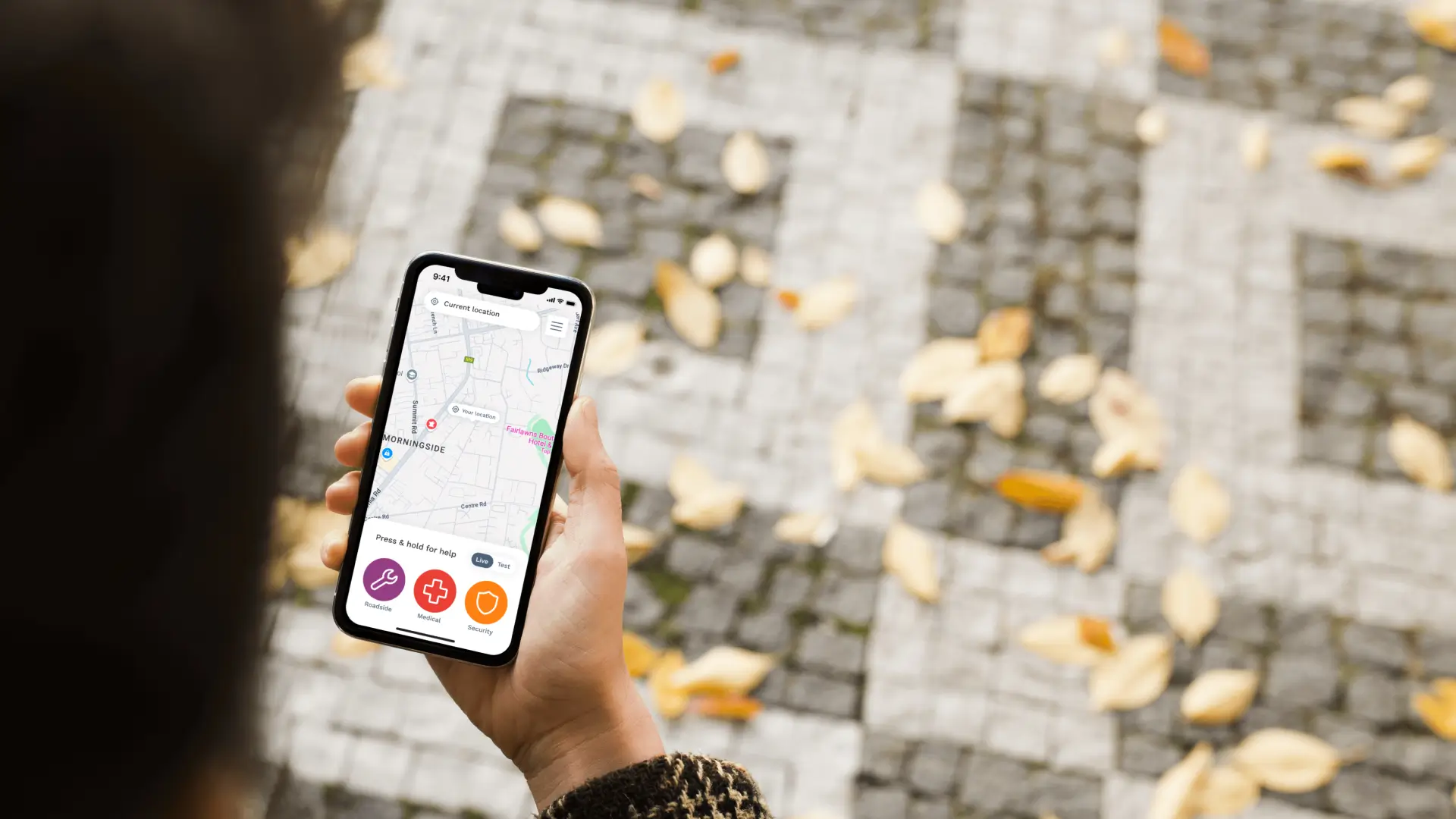
There were already big financial services bases and telematics bases. Even Uber, as an example, our SOS lives within Uber.
Namola is probably our biggest direct-to-consumer brand that you can download for yourself and your family. We're the engine behind all of that.
I like to compare it to Intel Inside. You can't contract with us directly as an end user, but you can go to your bank, your insurer, your vehicle tracking company, and you can access us through them or through Namola.
Brent Lindeque: So what I was alluding to is that you're kind of the backbone. I think I started off by saying that.
Warren Myers: We're the response piece. The app is there, and there are features you can use. But when you need help, it comes into our environment, and we've got technology in all the vehicles.
It's very much like Uber, actually. There's no human dispatching. The closest vehicle gets a notification, they accept, they navigate to you, and they come.
Our average response time in South Africa is seven minutes for security. It's faster than any police force in the world.
Our ambulance response time is still at about 13 minutes, which is also super quick, but that's because there aren't as many ambulances as armed response vehicles, and their vehicles stay at their offices. They don't really sit on the roads.
We've got great ideas about how we're going to bring that response time down. We can get into that. It's exciting.
Building a life-saving platform
Brent Lindeque: That does sound exciting.
You've got emergency services if someone's in trouble, if there's a crime or something is happening in their homes, while they're driving or while they're out at a shopping centre.
They'll be able to access either an app they're with or AURA itself. Do you guys have a platform as well?
Warren Myers: No, you have to go through one of our partners.
Brent Lindeque: So you go through the partners. You're able to call emergency services or ambulance services. What other offerings do you have?
Warren Myers: It's really those two primary products. We've been asked to Uberise everything you can think of.
Brent Lindeque: Of course. We want help for everything.
Warren Myers: You can't believe what I've been asked to use the platform to create on-demand access to.
But our whole vision is creating a world where everyone is safe.
Our key metric is lives saved. At the top of every report in our business is: did we save a life? Did we make a place safe?
We've stayed away from doing things like roadside assistance, which was an obvious one for us to go into, or Uberising other services like electricians and plumbers.
A lot of folks have asked us to do that, but our core metric and focus point is being a life-saving platform.
It's really focused on security response to a safety incident or medical response to a medical emergency.
Brent Lindeque: It's two vital things that we need in a country where we face hardships on a daily basis, and those hardships come in many different forms.
I know when I'm driving around, I'm scared. You never know what's going to be around the next corner. You see the horror stories on social media. You've always got to be aware.
To know that there is help at the end of the line is exciting.
Warren Myers: We're close to the stats. Unfortunately, 90% of South Africa's crime stats are in the townships.
The leafy suburbs have improved a lot. I think it's mainly due to us and the private security industry really doing a great job.
Unfortunately, the real hard numbers, sexual assault, rape or murder, live within the townships.
That's why we've built this to democratise safety. Those stats are not going to move until these folks can access something and get help quickly.
That's why our network spans everywhere. Literally wherever people live, we've got cover.
Making emergency response affordable
Brent Lindeque: That's what I wanted to get into today: the price point, because you want to bring the price down.
A lot of people are apprehensive about apps because they think, "What's the monthly fee? Am I going to have to pay a fee to download it? What are the fees?"
Warren Myers: In a lot of cases, our partner provides free access to it.
You don't pay for access to it in Uber. If you're in an Uber ride and you hit the SOS button, it comes through to us. That's almost sponsored.
Typically, the monthly price point for an individual is about R29 per month, and I've got to stress that includes all the usage.
Some people think, "I'm going to pay that subscription and they're going to bill me if I get an ambulance." We take care of that. It's included.
It's like insurance. You pay your monthly subscription and your claims are included.
Protecting your family from anywhere
Warren Myers: The other offering is for a family of five, and a lot of our partners now have the ability to enable you to track your family, similar to Life360, and you can dispatch help to them.
If I can't get hold of my dad, or if I need to dispatch help to my wife, or they need to send help to me, you tap on them, you dispatch help to them, and a car goes to them.
It's the first time ever that you can protect your family when you're not with them.
As a dad, this is your number one priority in the world: to protect your family.
That's running at about R89 a month, and it's anywhere and includes security and medical.
Brent Lindeque: So literally, if you're worried about your mother, your granny, your daughter or your son, you could go, "I haven't heard from them. I can see that they're here, but they're not answering their phone. Please send emergency services there."
Warren Myers: Yeah.
Brent Lindeque: That's incredible.
Warren Myers: And you can watch the car going. Similar to Uber, you can see the car going.
Brent Lindeque: You'll see the car going out and helping them. It is exciting to know that safety is just a click away.
Rethinking emergency medical response
Brent Lindeque: I want you to go back ten steps. You spoke about the fact that you're going to make ambulances a little bit easier. You've got an idea?
Warren Myers: It's way past an idea.
I had an aunt who choked and passed away in a restaurant in Sandton.
Brent Lindeque: Oh, sorry.
Warren Myers: It was horrible, and we already had the ambulance network.
I thought to myself, for those situations, which in the industry you call airway, breathing or circulation, if your brain's not getting oxygen, you have seven minutes.
We know our average response time is 13 minutes.
The hard truth around the infrastructure is that there are only so many private ambulances. They're very expensive to set up and run. Also, they stay at their offices.
What we're starting to do is onboard vetted paramedics, nurses and doctors who can provide stabilisation, who have our app on their personal phones, and they get dispatched by our platform within five minutes.
Literally, if it takes them six minutes, they won't even know it's happening. It works on the Google Maps estimated time of arrival.
Their job is to go and stabilise the patient.
A lot of the time, if someone's having an airway, breathing or circulation issue, like a drowning, an arterial bleed, a choking scenario or a cardiac event, the stabilisation is fairly straightforward if you have the training. It's first aid, basically.
When a life is under threat, an ambulance is on the way, but a responder also comes out to stabilise the patient while the ambulance is en route.
That product is being rolled out. It's already live in the three major metros.
We're working with unbelievable voluntary groups that are organising these first aiders, and we're kitting them out. They get a medical kit.
What's great is that almost all of the time, they want to do it. It's not a commercial thing, really. They just want to go and save a life, which is exactly what we do as well.
I've got investors and everything, but our key metric and our impact metric is that we want to make the world a safer place. We want to save lives.
When my aunt choked in the restaurant, there was no doctor there.
A friend of mine phoned me a day later. He's a doctor. He was like, "I was two minutes away."
We've just used technology to enable that, using an estimated time of arrival, so someone can get in their car, go and stabilise the patient.
Brent Lindeque: It is incredible. I'm really sorry about your aunt.
But from her legacy, something has been born that will go on to change many lives in South Africa.
Wearables and the future of emergency response
Brent Lindeque: I have to bring this up because when people see the copy for the show, they're going to go, "Is it the ring? Is it the Oura Ring?"
Warren Myers: I'm wearing mine as well.
Brent Lindeque: The name's similar, right?
Warren Myers: The name is similar. You spell theirs O-U-R-A. They're a biometrics and health wearable.
We're working a lot in this space. We've got networks around the world where we can dispatch police and ambulances.
In some countries, we have private networks, like in the UK and the US.
But these folks, I believe, are the future of humans getting help.
At the moment, if you want to tell the internet that you're having an emergency, you have to phone or open an app and press a button, which I think is going to be disintermediated in the next five years.
The panic alert is going to come directly from your heart rate, spiking at a signature level that is indicative of a trauma event, not you going for a run or doing whatever.
They know what happens to your heart rate when you get attacked and how quickly it spikes. They know what an aneurysm looks like. They know what a cardiac arrest looks like.
It's obvious to me that these platforms are going to need one central integration that handles the plumbing of ambulance dispatch.
That's why, at the moment, we have about 42 countries where we have partners running our platform who could receive a call in Indonesia, in the local language, from an Oura Ring.
We haven't done a deal with them, but just as an example, the location comes from that, it goes to that partner, and they dispatch the ambulance there.
It's like one global network for emergency response.
I believe this is the future of how humans are going to get help, and it's going to be revolutionary.
Generally, it's a third person who calls for you. The folks who are having serious issues don't have the ability to phone or panic.
Brent Lindeque: I think of someone who's a little bit more elderly, alone at home, who might suffer a fall or an aneurysm.
To know that, in five years' time, some little wearable on your finger, the Oura Ring, could get in touch with AURA in the back end and send help.
Warren Myers: I call them autonomous triggers.
When there's an emergency, it immediately hits the internet, and then it comes into our API, into our platform, and the closest vehicle goes out.
That's the vision.
Brent Lindeque: The vision. And I'm sure it'll get there.
AI and predictive crime prevention
Brent Lindeque: Before we started rolling the cameras, we started chatting about the fact that crime is becoming more difficult because of services like yours.
Warren Myers: I think it's going to be difficult to be a criminal, or at least a street criminal. I'm not talking about cybercriminals. I'm talking about robbing, attacking people and sexual assaults in the next three to five years.
I think it's not just us. It's a combination of camera technology and predictability.
We're very involved with a company that's pioneering crime prediction. It's an AI business where they have multiple input layers that are collating where and when an incident is most likely to occur, and that data is huge.
I've actually said to them that I think it's the most important crime-fighting weapon we'll ever have in the world.
Even 20–30% predictability changes the whole playing field because the problem with criminals is that they always have the element of surprise.
As quick as we are, we get there in seven minutes. Seven minutes sounds quick, but in a snatch and grab or a hijacking, it's very long.
The only thing we can do is start to build what's called demand prediction.
A good example is Uber. They're super quick. Why are they quicker than us?
Uber gets to its customers in an average of three minutes because they know where rides are going to be. They've got algorithms predicting where rides are going to be. That is such a huge asset for them.
We don't have that. We don't know when a criminal is going to come along.
Partnering with these guys and seeing how much it's grown and how it's progressing with these models is insane.
We're just ready to be the responder. We didn't get into building out the modelling. We just know that for as long as there are emergencies, there'll be humans who need to go out and respond.
We're focusing on being that back end.
It's good news, as per your podcast. Crime in South Africa is the leading headline of why people leave and why they're not happy here.
I've been in this industry for a while. It's gotten a lot better in the leafy suburbs. Holistically, across all regions, I think we're winning the fight.
I think a lot of criminals are going to move online. The return on investment is far lower risk, and we're already seeing it. You see the banks at the moment getting hit by online crime.
Brent Lindeque: You don't have to tell me about scammers online. It's happened once or twice. Thankfully, I didn't get sucked in.
Building awareness around AURA
Brent Lindeque: That is good news, that you're working towards a goal.
I can feel your passion for what you do, and you're living your purpose for South Africa.
I have to ask the question: where have you been? Obviously, this is the first time that I've heard of you and your company.
Why have you not been shouting from the rooftops for the last couple of years?
Warren Myers: Our go-to-market strategy has always been through partners. We kind of left it to FNB and OUTsurance to tell the story, and they did really well.
We've got a couple of million users on our platform, and they told the story.
What we're doing with you now, and moving forward, is trying to tell our own story and let people know where they can go and get it.
I even have friends and family who know me well, and they're like, "How do I get AURA?"
We probably should have started a long time ago.
We assumed that our partners would really blow the horn, and they have done really well.
Like I said, we have a couple of million users, but there are 60 million people here. Why are half of them not on this?
We can cater for that. We've got enough response capabilities to do that.
We're trying to take a bit more control of the story and let people know about it and where to go to get it.
How South Africans can access emergency response
Brent Lindeque: This platform exists, it works, and it is helping people.
The question is, where do they go to get it?
Warren Myers: There are quite a few places. Your bank — FNB is our leading partner. There's Discovery Insure, OUTsurance, Momentum is a big partner, and Namola.
If you're not with any of them, you can go onto Namola and subscribe to their Plus product.
Namola is a free product, but that gets you police, which you might as well call Santa Claus.
There's also Tracker, which is one of the biggest vehicle recovery companies. They've got a huge base of users that's growing every month.
Between those, those are the key partners.
I also think, if you're not with FNB, ask your bank. Ask your insurer. Perhaps they are with AURA, or they're thinking about it. Most of them are.
King Price is with us. I'm forgetting a few, but there are a lot of them.
Brent Lindeque: That's fine. We're going to write an article about this, and I'm going to try to mention as many as I can, plus a link to AURA's actual website.
They don't have an app, but they are with all the other partners where you can go and get help.
Warren Myers: I think the link we're sharing has got all those partners there that you can go and check out.
Brent Lindeque: There we go. It's that easy.
Creating a safer South Africa
Brent Lindeque: Warren, it's been great.
Warren Myers: Is that it?
Brent Lindeque: That's it.
Warren Myers: Oh, I was having fun!
Brent Lindeque: Was it easy?
Warren Myers: Great conversation.
Brent Lindeque: Brilliant. I really think this is a good news story, and I'm not being facetious.
I think making South Africa a safer place for everybody is the ultimate goal.
We all want to live in peace and know that we're safe.
Warren Myers: It's literally the best place in the world to live if we fix that problem.
Brent Lindeque: And you're fixing it, so thank you.
Warren Myers: Pleasure. Thank you.
Brent Lindeque: Great show.
I want to thank BetterBond. They're our sponsor for the show. They sponsor all our podcasts, and they're a great partner to have.
If you want to get more episodes, if you want to see all the other stuff that we talk about and the people that we talk to, please go visit all the platforms: YouTube, Apple, Spotify, Facebook, TikTok, Instagram. We're everywhere.
Like I say every week, wishing you only good things.
Okay, love you, bye.
Recommended resources


Newsletter
Stay up to date with the latest news, announcements, and articles.


Join our newsletter

You're in!
Thanks for signing up. You’ll start receiving updates, product insights, and industry news shortly.”

Ready to power up your protection?
Let’s explore how to embed response in your business.
Enablement
Get started
Associations, certifications and compliance