World Paramedics Day: Building better emergency service systems
Every 8 July, World Paramedics Day reminds us that emergency services are only as strong as the people who power them. In South Africa, paramedics face serious, systemic barriers. Better systems driven by technology, investment, and collaboration can change that.
Every emergency response starts before a paramedic reaches the scene.
It starts with a call, a location, a dispatcher, a vehicle, a responder network, and the information needed to make fast decisions under pressure. When those parts work together, paramedics can focus on patient care. When they do not, responders are forced to navigate delays, blind spots, duplicated effort, and operational stress before treatment even begins.
World Paramedics Day, celebrated on the 8 of July each year is a moment to recognise the people who respond when lives are at risk. But real support means more than saying thank you, it means building connected systems that help paramedics respond faster, work safer, and focus on patient care.
Paramedics are clinical responders, not transport providers
Paramedics are often misunderstood as ambulance drivers. That view ignores the medical, operational, and decision-making demands of the role.
As Jade Pfohl, Medical Operations Manager at AURA, explains:
"The most pervasive misconception is that paramedics are merely 'ambulance drivers.' This downplays the high-level medical, analytical, and logistical expertise required to stabilise patients in uncontrolled environments. Their role is not just to 'respond' — it's to act as a vital, mobile extension of the healthcare system, demanding clinical precision and tactical decision-making under extreme pressure."
Paramedics assess patients clinically and manage complex conditions simultaneously, without the backup of a hospital ward. In South Africa, they do this in some of the most challenging environments in the world.
When you understand the skill and pressure behind the role, the next question becomes clear: what does the system supporting them actually look like?
The real pressures facing responders in South Africa
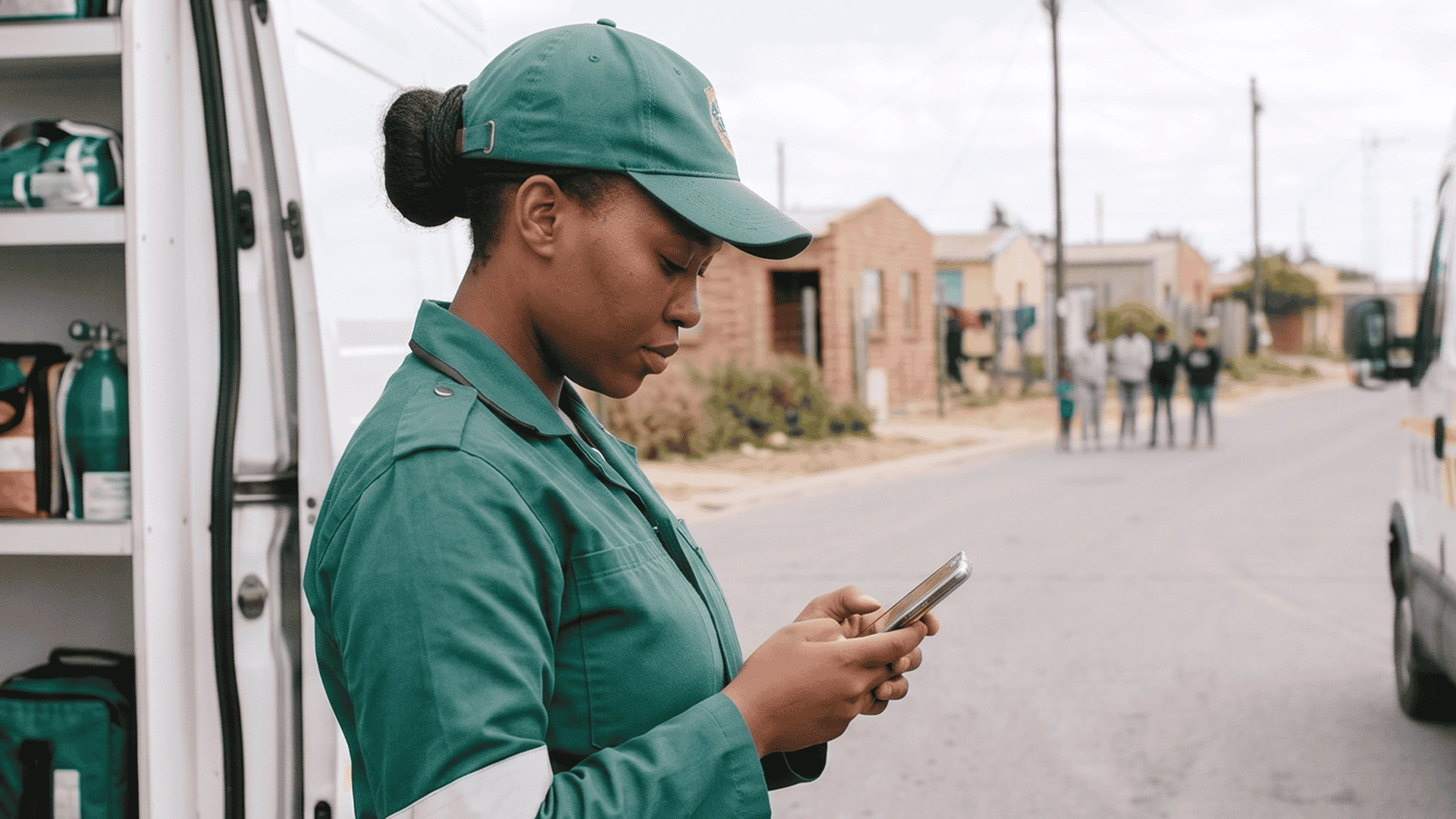
In South Africa, emergency medical responders operate in one of the most demanding environments in the world.
Some provinces like Limpopo reportedly operate with only 1 ambulance per 30,000 residents — far below the WHO recommendation of 1 per 10,000; and more than half of all urban ambulance callouts already have an average waiting time of over 30 minutes. iFearLESSDSC Attorneys
Jade describes the pressure clearly:
"In South Africa, responders face a collision of resource shortages, high-risk environments, and infrastructure bottlenecks. Every second spent navigating unmapped settlements or waiting at overcrowded hospitals is time stolen from patient care. These operational strains are the primary drivers of burnout — eroding the very workforce we rely on."
Burnout doesn't happen in isolation. It happens when skilled, committed people work inside systems that were never built to support them. Which raises the harder question: what exactly is broken?
The real challenge is coordination
The biggest problem isn't a lack of effort. It's a lack of connection.
Emergency services depend on multiple moving parts: the person calling for help, the call taker, the dispatcher, the responder, the vehicle, the receiving facility, and the information moving between them.
When those parts are disconnected, delays and blind spots appear.
One of the clearest examples is the “hospital bounce”. This is when a responder arrives at a facility only to find no available beds and must move on, losing irreplaceable minutes.
This is not a people problem. It is a systems problem. And systems problems need systems-level solutions.
Technology as the invisible partner
Better emergency service systems should not make emergency response more complicated. Done right, it means less guesswork and more time for what matters most — the patient.
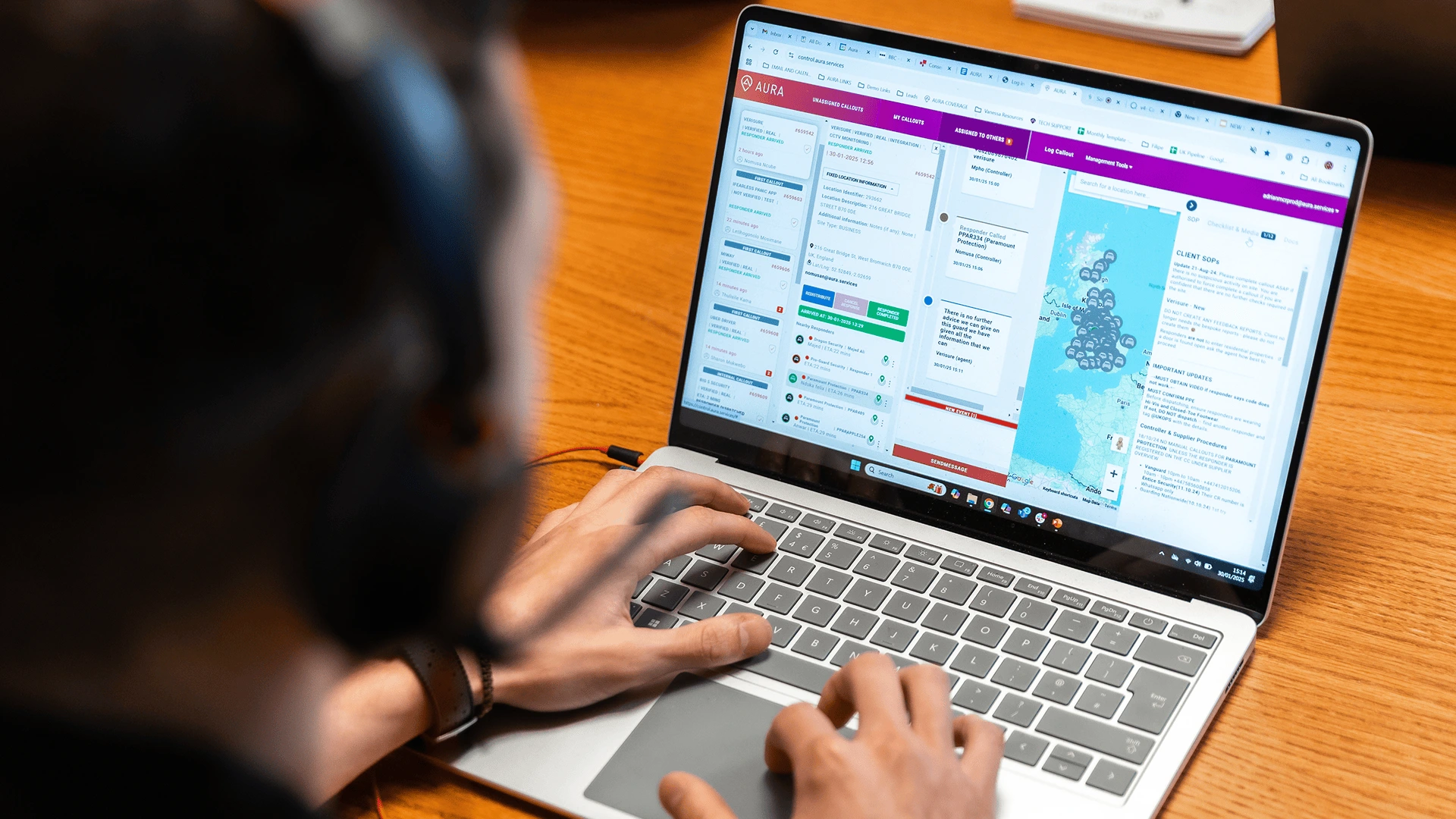
Real-time dispatch visibility, accurate GPS data, and digital reporting tools reduce the cognitive load on responders. Instead of navigating blind or making calls without context, paramedics can arrive informed, prepared, and ready to act.
Jade describes this as the role of the "invisible partner":
"Technology should act as an 'invisible partner,' automating administration to reduce cognitive load. By digitising dispatch and providing real-time data, we remove the need for guesswork — allowing teams to focus entirely on patient care."
This is exactly where AURA people protect play a role — connecting responders, dispatchers, and the broader emergency ecosystem with the real-time intelligence needed to act faster and smarter.
Building accessible emergency services for all
In South Africa, where you live can still determine whether help arrives in time. Rural and underserved communities face the steepest barriers. Closing that gap takes more than better dispatch software. It takes a workforce that is skilled, supported, and sustainable.
Jade highlights a dimension that often gets overlooked:
"We must prioritise human capital by creating clear, sustainable career pathways — specifically allowing junior responders to advance to Advanced Life Support (ALS) qualifications without the financial strain of pausing their income. By investing in our workforce's development, we ensure the system has the skilled hands it needs to deliver equitable care to all."
Accessible emergency services are built from the inside out. Technology helps connect the system. People make it work. When both receive equal investment, the communities that have historically faced the greatest barriers stand to gain the most.
A message to those who show up
Behind every statistic, every structural gap, and every call for reform, there is a person who showed up anyway. Who navigated the unmapped roads, absorbed the pressure, and put the patient first — regardless of what the system gave them to work with.
On World Paramedics Day, that deserves to be said plainly:
"To the paramedics and responders who show up every day: your work is the literal difference between life and tragedy, often carried out in the most invisible and challenging of circumstances. We are fighting to build a system that matches your dedication, ensures your safety, and treats your role with the profound respect and support it deserves."
The system our responders deserve
If we value the people who respond when lives are at risk, we need to build better systems around them. Systems that are more connected, more data-driven, more collaborative, and more supportive of the responders who carry the pressure on the ground.
This World Paramedics Day, let's honour paramedics not just with words, but with action: better tools, genuine collaboration, and a unified approach to emergency care across South Africa. That's the system our responders have earned — and our communities deserve.
Yashvi Gupta
Marketing Executive
FAQs
Everything you need to know about emergency service systems.
When is World Paramedics Day?
World Paramedics Day is observed every year on 8 July. It was launched in 2022 to recognise the work of paramedics and emergency responders around the world.
What are the biggest challenges facing emergency services?
Emergency services often face a combination of resource constraints, communication gaps, infrastructure challenges, uneven access between communities, capacity pressures, and workforce strain. These challenges affect both the responders delivering care and the people who depend on them in critical moments.
How can technology improve emergency response times?
Technology improves response by enabling real-time GPS tracking, digital dispatch coordination, and data sharing between responders and hospitals. This removes guesswork, reduces the "hospital bounce," and gets the right responder to the patient faster.
What is AURA's role in emergency services?
AURA is an emergency response technology platform operating in South Africa. It connects responders, dispatchers, and emergency networks with real-time data — helping reduce response times and improve outcomes for both patients and responders.
Building better emergency response starts with better systems.
Discover how AURA is strengthening emergency services across South Africa.
Join AURA at the Nevada Security Association in Las Vegas on October 28 for its annual Industry Get Together & Youth Scholarship Fundraiser.
United States
United States
•
November 18-19, 2026
LLSSA Convention
Meet AURA at the LLSSA 2026 Convention in Kenner and discover a new way to grow recurring monthly revenue from the accounts you already serve.
United States
United States
•
October 21-23, 2026
TBFAA Convention & Trade Show 2026
Meet AURA at the TBFAA Convention & Trade Show in College Station and explore how on-demand guard response can help you grow recurring monthly revenue from the accounts you already serve.





.webp)

.webp)


.webp)



.svg)

.svg)
.svg)
.svg)
.svg)