AURA mid-year product review: What we launched in H1 2026
In the first half of 2026, AURA rebuilt its responder app, introduced embedded navigation using Google Maps Platform, launched a mobile site-capture tool, added property classification, and strengthened access controls across its customer platforms. Together, these updates improve how properties are activated, how incidents are dispatched, how responders reach sites, and how response information is managed.
Every emergency response depends on several connected steps. The right information must be captured, an incident must be assessed, the most suitable responder must be dispatched, and that responder must be able to reach the scene with the context they need.
During the first six months of 2026, we focused on improving these critical stages of the journey across both security and medical response.
The updates span three areas of the AURA platform: the tools responders use in the field, the systems customers and partners use to manage secure access, and the tools installers and dealers use to activate and manage properties.
Layer
What changed
Who it impacts
Responder
Rebuilt responder app; navigation moved onto the Google Maps Platform
Security and medical responders, control centre teams
Customer
Verified-identity access across the customer platform and portals
Administrators, control room managers, supplier admins
Installer & dealer
Mobile site capture, site classification, and the Installer & Dealer Programme
Installers, dealers, integrators and field teams
The responder layer: a rebuilt app and new navigation engine
A responder app designed with responders
The AURA responder app was rebuilt to give responders faster access to the information they need and more control during an incident. Every screen was reviewed with active responders to simplify the experience and reduce their reliance on control room support.
What that looks like in practice:
Clearer callout screens: Callout type, location, instructions and time received sit up front. Responders can accept a callout and begin navigating with fewer steps.
Mark as arrived: When automatic arrival detection does not fire, responders can confirm arrival themselves instead of waiting for a controller to do it. Arrival times get more accurate, and the responder gets on with the job.
Stand down: If a responder accepts a callout and then genuinely cannot attend, they can release it. The callout returns to the network immediately rather than sitting with someone who is not coming.
Site information in the app: Building name and entry notes, access codes, photographs, documented risks and site documents are available in the app, so controllers are no longer relaying files mid-incident.
Built for the devices people actually carry: Performance work reduced load times, improved behaviour in low-connectivity areas, and cut background battery and data use, with consistent behaviour across iOS and Android, including older and mid-range handsets.
For medical responders, the same release carries clinical context: colour-coded triage priority, the required level of care shown before a callout is accepted, and critical patient information available on arrival.
These changes reduce unnecessary administration for responders and allow control room teams to focus on active incidents and escalations.
Navigation developed with the Google Maps Platform
The second change to the responder experience is the navigation upgrade. Developed with Google Maps Platform, AURA is the first authorised emergency response platform to integrate Google Maps Platform navigation directly into its responder app. The feature is currently being rolled out across South Africa, Kenya, the United Kingdom and the United States.
Previously, the ETA shown at dispatch and the route followed by the responder could come from different systems. While they usually aligned, traffic, road closures and local routing conditions could create discrepancies. This meant the person waiting for help might see one arrival time while the responder was working from another.
As Grant Macwilliam, Chief Technology Officer at AURA, puts it:
"The product challenge here comes down to consistency. Our goal around bringing this update to our platform was to introduce a single source of truth that we can really trust."
Routing, navigation, ETA calculation and live response visibility now run on one mapping engine. Responders get embedded turn-by-turn navigation inside the app they already use, with live traffic and seamless rerouting, and without leaving their workflow.
That has different value depending on where you sit:
For the person waiting, an ETA is not a number; it is reassurance. Seeing where help is and trusting when it will arrive changes what you do while you wait.
For responders, better routing means less time in congestion — and being measured against timelines that reflect real road conditions.
For partners, response-time data is how service delivery gets assessed. Aligning it more closely with real driving conditions makes that reporting more defensible.
For control centre teams, everyone works from the same picture of the incident.
As Grant says:
"Everyone sharing one picture, coordination becomes faster. In our world, coordination means help arrives sooner."
One thing that did not change: all dispatch telemetry and responder position data stays inside AURA's own secure environment. Navigation got better without customer trip data or incident detail leaving the closed loop.
The customer layer: protection that extends into your digital world
Keeping people safe also means protecting the systems and information that support every response. This year, AURA strengthened account security across its customer platform, control centre and supplier portals.
Each account is now linked to a verified email address belonging to the individual user. New users create their own password through a secure invitation link, ensuring that login credentials remain personal and are not shared. Users can also recover access independently, while regular password resets add another layer of protection.
Verified email addresses also create the foundation for future capabilities such as single sign-on and make it easier for AURA to contact the right person when action is required.
The principle is simple: everyone involved in the response chain should be verified, reachable and responsible for their own access.
What that changes:
Users own their access. Forgotten passwords are recovered independently through a verified address, not by asking a colleague.
Every account is protected. Verified addresses are the prerequisite for platform-wide security enforcement and for single sign-on.
Existing accounts are being moved to the updated standard through prompts within the platform. Users who have not yet verified their email address should do so when they next log in.
Responders who sign in with a mobile number and one-time PIN are unaffected.
The installer and dealer layer: faster site activation from the field
The newest update addresses a critical gap between installing security hardware and activating physical response. Previously, the hardware could be installed while the paperwork and site setup were still being completed. During that delay, customers might believe their property was fully protected when physical response had not yet been activated.
Mobile site capture for on-site property activation
The mobile site capture tool lets a technician or salesperson register and activate a location from the customer's doorstep, on a phone, in minutes. It runs in the browser; there is no app to install.
In one pass, a field team can:
Pin the site: Enter the address and let the tool resolve precise latitude and longitude, and what3words for locations a postal database handles badly.
Capture access: Gate parameters, lockbox and entry codes, building name and entrance notes, and documented site risks, from structural constraints to dogs on the property.
Add evidence: Photographs of access points and layout, taken on the spot with the phone camera, plus supporting documents.
Set tasks and contacts: Attach checklists responders must work through on scene, and nominate a primary contact for live dispatch tracking plus recipients for the incident report.
Connect monitoring: Link the site to its monitoring partner using that partner's reference ID.
The moment it is submitted, it is live in the portal and dispatch-ready. Role-based logins mean field staff see the capture tool and nothing else; commercial dashboards stay with management.
Site classification for more relevant response information
AURA also introduced site classification within the site-capture tool.
Every site is now described by two linked fields in the Location details panel.
Site category sets the broad location type and is mandatory.
Site type sets the more granular subtype and is optional, though we strongly recommend it: choosing a category filters the list so only the relevant subtypes appear.
Site category (location type)
Site types (location sub type)
Residential
House; Apartment Complex; Gated Community
Construction
Construction Site; Housing Development; Vacant Lot; Agricultural Land
Industrial
Factory; Warehouse; Plant Machinery
Infrastructure
Solar Farm; Railroad; Mobile Network Tower; Fibre Infrastructure; ATM
Office
Office; Business Park
Public Sector
School; University; Medical facility; Courthouse
Retail
Shopping Mall; Bank; Restaurant; Hotel; Shop; Service station
Storage
Storage facilities
This matters because different properties require different response instructions.
A responder attending a shopping centre needs different access information and tasks from someone attending a gated community or mobile tower.
Classification allows customers and monitoring centres to create more relevant task lists, provide better site context and report on response activity by property type.
For organisations managing large or mixed portfolios, this creates a more structured view of the locations they protect.
The logic is straightforward. Installers, dealers and integrators hold the customer relationship and the hardware. Monitoring partners hold the signal.
What has historically been missing is a guaranteed physical response.
The programme adds that layer without asking anyone to change how they operate:
Hardware-agnostic. It works with the alarms, sensors and cameras already on site. No equipment overhaul.
Alongside your monitoring partner, not instead of it. AURA integrates with the monitoring centre or central station you already use. That relationship stays as it is.
Your brand, your relationship, your pricing. Partners buy at a wholesale subscription rate per site and set their own retail price. You own the customer, the incident report and the recurring revenue.
No fleet. No vehicles, no guards to employ, no dispatch desk. AURA runs a vetted, licensed responder network and the dispatch engine behind it.
Flat-rate rather than per-incident. Unlimited callouts on a monthly subscription, governed by a fair use policy and backed by verification that filters false activations before anyone is dispatched.
Onboarding is a three-step digital process: Intake form, partner agreement, portal access. After which administrators can immediately create logins for technicians and sales staff and start loading sites.
How AURA's product updates improve the full response journey
At AURA, we are constantly improving our technology to make emergency response faster, more connected and more effective — helping us move closer to our goal of making the world a safer place.
These latest product updates strengthen every stage of the response journey. Installers can capture, classify and activate a property while they are still on site. Customer platform access is tied to verified users. When an incident occurs, responders receive clearer information, navigate using live traffic data and manage more of the response directly through the app.
Together, these improvements remove delays, reduce manual administration and give the people managing a response better information when it matters most.
Zane Van Rooyen
Product Marketing Manager
FAQs
Everything you need to know about AURA's product update.
What are the main AURA product updates in the first half of 2026?
AURA rebuilt the responder app, introduced navigation using Google Maps Platform, launched mobile site capture and property classification, and strengthened account-access controls.
Do responders need training on the new app?
No. The upgrade arrives automatically, and the changes are largely visual and flow-related, with in-app guidance for newer features. Payout processes and rates are unchanged.
Does the Google Maps Platform upgrade change how AURA handles data?
No. All dispatch telemetry and responder position data remains inside AURA's secure environment. Customer trip data and incident detail are not exposed to third-party tracking.
Which regions get the navigation upgrade ?
The navigation update is being rolled out across South Africa, Kenya, the United Kingdom and the United States.
Does the Installer & Dealer Programme replace my monitoring centre?
No. It is a response layer that works alongside your existing monitoring centre or central station, providing the physical response they need to dispatch. That relationship stays exactly as it is.
Ready to see it for yourself?
If you would like a walkthrough of any of these updates on your own sites and setup, book a demo or speak to your AURA customer success contact.
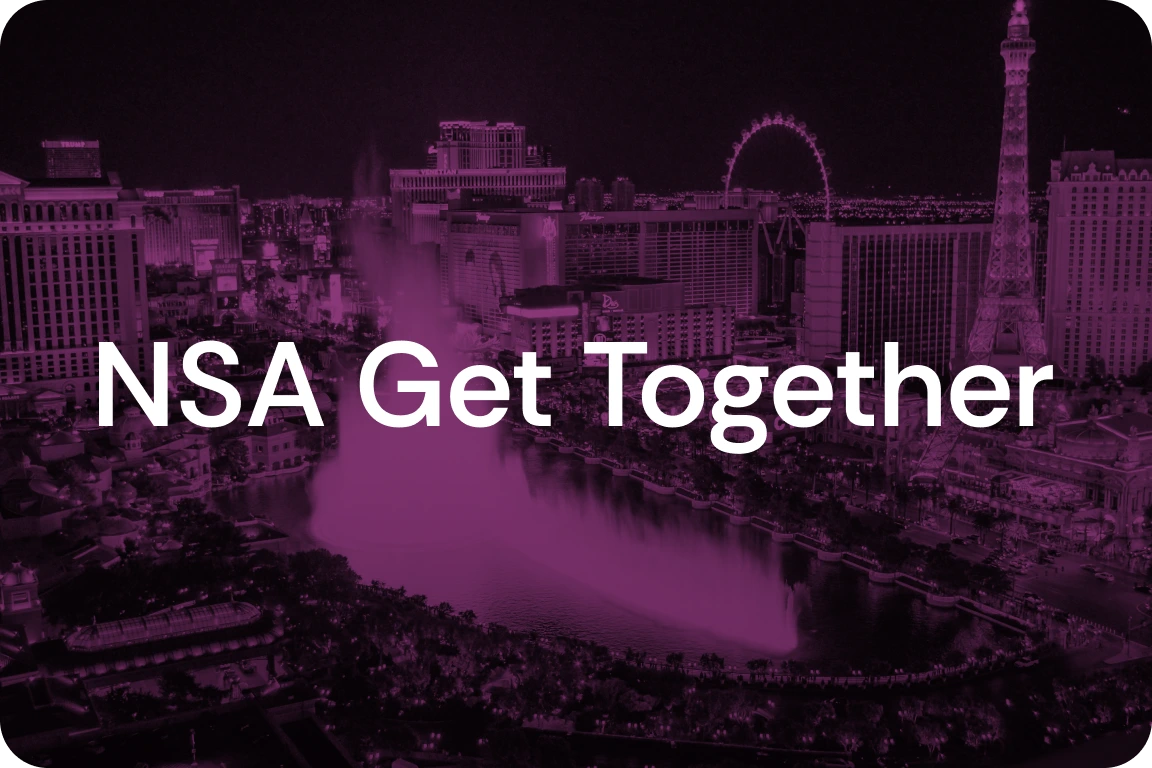
Join AURA at the Nevada Security Association in Las Vegas on October 28 for its annual Industry Get Together & Youth Scholarship Fundraiser.
United States
United States
•
November 18-19, 2026
LLSSA Convention
Meet AURA at the LLSSA 2026 Convention in Kenner and discover a new way to grow recurring monthly revenue from the accounts you already serve.
United States
United States
•
October 21-23, 2026
TBFAA Convention & Trade Show 2026
Meet AURA at the TBFAA Convention & Trade Show in College Station and explore how on-demand guard response can help you grow recurring monthly revenue from the accounts you already serve.





.webp)
.webp)




.webp)



.svg)

.svg)
.svg)
.svg)
.svg)