Panic button and emergency assist services in South Africa: what businesses need to know
Businesses have a duty of care that extends beyond the workplace. This guide explores panic button services in South Africa, explains the differences between consumer apps, ARC connected hardware and network dispatch platforms, and examines how AURA coordinates security and medical response through a nationwide network of vetted response partners.
The responsibility to protect employees does not end when they leave the office. Modern workforces often include remote employees, field teams, delivery personnel, travelling staff, and workers who spend part of the day alone. Each of these environments carries its own exposure to risk, and most organisations have no reliable method to know when an employee needs help or how quickly that help can reach them.
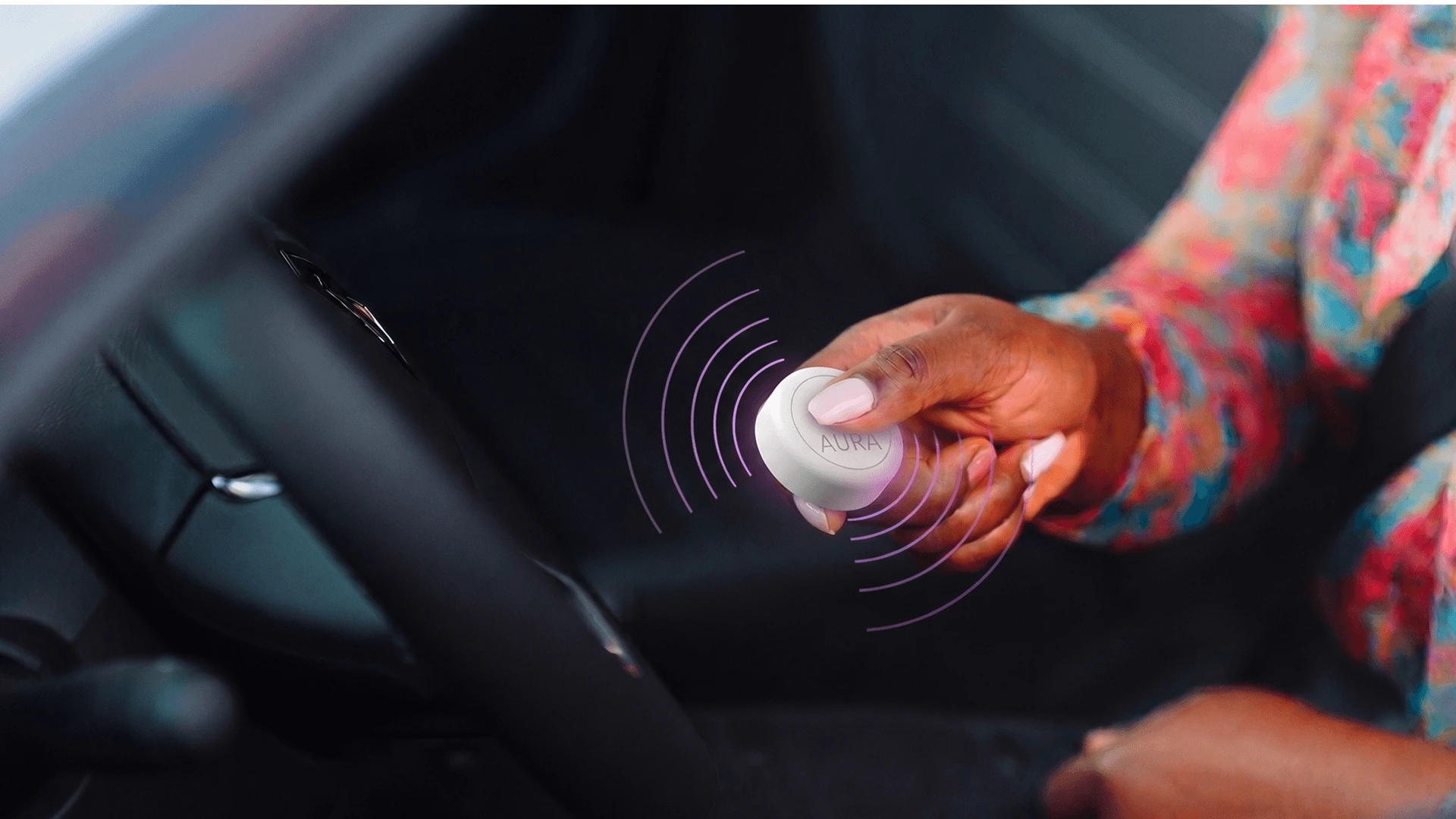
A panic button service in South Africa provides a direct route to emergency assistance when an employee faces a safety threat or medical incident.
AURA's people protect model provides personal safety services for employees in South Africa by offering access to a nationwide network of private security and medical response partners through a central technology platform.
When an alert is triggered via a phone-based panic button, the platform identifies available private security and medical response resources within its network and facilitates dispatch through participating partners.
This creates a more accountable duty of care model, where protection can be tracked, assessed and managed across the workforce rather than left to chance.
For organisations investing in personal safety services for employees in South Africa, visibility into response performance and coverage has become an increasingly important requirement.
The following guide is intended for businesses and HR departments evaluating emergency response systems for their workforce, not consumers searching for a personal safety app.
What are panic button services in South Africa?
A panic button service provides immediate access to emergency support when someone feels threatened, unsafe, injured, or faces a medical emergency. Pressing a button on a device or smartphone app sends an alert containing the user’s location and details to a response centre, which then coordinates the appropriate assistance.
Consumer panic button apps
Consumer panic button apps are personal safety applications installed on a smartphone. A person downloads the app, creates an account, enters their details, and uses their phone to trigger an emergency alert when assistance is needed.
When the panic button is pressed, the alert is sent through the app provider's platform. Depending on the service, the alert may be received by a monitoring centre, a contracted security company, emergency contacts chosen by the user, or a combination of these.
Monitoring centre connected hardware
Monitoring centre connected hardware refers to physical security devices linked directly to an Alarm Receiving Centre (ARC). These devices can include fixed panic buttons, alarm panels, intrusion detectors, and other security equipment installed at a site.
When an alarm is activated, the signal is transmitted to the ARC. An operator receives the event, accesses the account information, follows the required procedures, and arranges a response according to the instructions attached to that account. The ARC acts as the central point for receiving alarm signals and coordinating the next steps.
AURA's network dispatch platform
AURA's dispatch platform operates at the response coordination layer rather than the consumer app layer or the hardware layer. The service aggregates independent security and medical companies into a unified, on-demand ecosystem.
When an incident is verified and requires a physical response, the platform identifies and dispatches the nearest available responder from a nationwide network of security partners. The focus is not on providing the panic device or the monitoring hardware itself, but on coordinating and managing physical response through a unified dispatch infrastructure.
Criteria
Consumer panic button app
ARC-connected hardware
Network aggregator platform
Response time
Variable and slower. Relies on manual routing from a digital call centre to local security firms. High friction in pinpointing off-grid locations.
Reliable and fast dispatch, but only within the localised patrol zones of that specific security company's fleet.
Sub-10 minutes. Dispatches the closest vehicle across a unified, multi-brand network, dropping response times by up to 60%.
PSIRA compliance
Often a grey area. The app itself is tech, but the underlying responders must be registered.
Depends on the security companies contracted by the monitoring centre.
Response companies within the network are required to meet the platform's participation and compliance requirements, helping organisations access PSIRA registered emergency response partners through a single platform.
Responder vetting
Many basic consumer apps simply route calls to public emergency services or unvetted local patrol companies.
In-house tactical training, background checks, and company-specific accountability structures.
Continuous digital auditing of sub-contracted fleets, requiring proof of licensing, vehicle tracking, and performance ratings.
Geographic coverage
Often limited to areas where the provider has established response arrangements. Coverage can vary significantly between regions.
Usually linked to the geographic footprint of the monitoring centre's contracted response partners.
Nationwide and scalable. Massive footprint spanning major metros and highways by linking hundreds of independent local fleets.
Enterprise integration
Generally aimed at individual users, families or small groups.
Commonly integrated with alarm systems, intrusion detection equipment, access control systems and monitoring centre software.
Designed to connect with monitoring platforms, alarm receiving centres, panic applications, security technologies and other systems that generate incidents requiring physical response.
How AURA's people protect works as a network aggregator layer
AURA is not a security company operating its own response vehicles, guards, or medical fleets. Think of us as a technology and coordination layer that sits between the person needing help and a large network of independent response providers.
This aggregation model solves a long-standing industry challenge. Traditionally, a monitoring centre would need to maintain relationships with multiple response providers across different regions, often relying on phone calls and manual coordination. Coverage quality could vary significantly from one area to another.
By aggregating thousands of responders from multiple security and medical providers into a single platform, AURA gives monitoring centres access to a broader response network through one integration. The monitoring centre retains ownership of the customer relationship and monitoring function, while AURA provides the technology that coordinates response delivery.
How it works:
User sends panic alert
A user triggers an immediate request for emergency assistance by tapping the panic button on their mobile app or connected wearable device.
Control room receives alert
AURA's 24/7 control room receives the emergency signal and reviews the user's real-time position data. Trained operators call the user to confirm the emergency and eliminate accidental false alarms.
Emergency response is dispatched
If the user cannot answer or confirms danger, AURA's intelligent cloud platform identifies and manages the armed response dispatch in South Africa by locating the closest vetted private security or medical response vehicle from an aggregated national network.
Users track responders live
Users can track the assigned emergency responder's location and estimated arrival time in real time on their smartphone.
They receive on-scene assistance
Responders arrive directly at the user's exact location, intercepting the incident to provide critical on-scene protection and medical support. They report outcomes back to the central hub.
Why PSIRA registration matters when lives and property are at risk
The Private Security Industry Regulatory Authority is responsible for regulating private security services in South Africa. Companies that provide armed response are expected to be registered and comply with the requirements that govern the sector.
For AURA, this is about protecting the integrity of the response network. A provider may have vehicles, uniforms and a strong local reputation, but if they are not registered, there is far less visibility into whether the company, its officers and its personnel meet the standards expected of the private security industry.
When someone presses a panic button, they are placing trust in the responder arriving at the scene. AURA therefore looks for evidence that a provider operates within the formal security industry and can be properly identified, verified and held accountable. PSIRA registration creates a record of who the company is, who works for it and whether it is recognised as a legitimate security provider. It is one of the first checks AURA considers when assessing whether an armed response company is suitable to join the network.
Use cases for AURA people protect
AURA panic buttons address personal safety risks across a range of working environments where employees may face threats, medical emergencies or situations that require urgent intervention.
Corporate campuses
Security incidents on large campuses can unfold far from security personnel. Employees may encounter aggressive behaviour, medical emergencies, suspicious activity or unauthorised access while moving between buildings, parking areas and shared spaces.
Field staff
Employees who travel between client sites, properties, or remote locations often work beyond the reach of traditional on-site security. Panic buttons provide reassurance for teams operating in unpredictable environments.
Lone workers
Many organisations employ staff who start early, finish late or work entirely alone. Security guards, maintenance personnel and warehouse staff may face medical emergencies, criminal activity or personal threats without colleagues nearby to raise the alarm. An SOS button for corporate employees can form part of a wider workplace safety programme designed for higher-risk roles.
Executive protection
Executives, public figures and key decision-makers often face higher personal security risks than the average employee. Panic buttons add another layer to existing protection measures during travel, meetings, site visits and public appearances.
Tarryn Pickup
Head of Global Marketing
FAQs
Everything you need to know about panic button and emergency assist services in South Africa.
What is the fastest panic button response time in South Africa?
AURA’s average panic button response time in South Africa is sub-10 minutes. Because the platform dispatches the closest available security and medical emergency responder in real time, it cuts out traditional manual dispatch delays and reaches users significantly faster than the industry average.
Does AURA's panic button service require hardware?
No, hardware is not required. AURA operates primarily as a digital, app-based solution. It can be integrated directly into smartphone apps via a virtual panic button. However, AURA’s ecosystem is highly flexible; for users who prefer physical devices, it can also integrate with standalone IoT panic buttons and existing home hardware alarm systems.
Is AURA's people protect PSIRA compliant?
Yes. While AURA is a technology platform rather than a traditional security agency, all private security companies and armed responders within AURA’s network are 100% PSIRA compliant. To join and remain on the network, partners must pass rigorous vetting, maintain valid PSIRA registrations, and carry mandatory Public Liability insurance.
How does AURA connect to armed response companies in South Africa?
AURA functions as a technology and network aggregation platform rather than an armed response provider. The platform integrates with a large network of private security and medical response companies across South Africa. When an emergency is reported, AURA identifies the closest appropriate responder within its network and coordinates the dispatch, allowing users to access assistance beyond the footprint of any single security company.
What is the difference between a panic button app and an emergency response network?
The difference comes down to the tool versus the infrastructure behind it:
A panic button app is simply the interface—the actual software button on your phone or device that you press to signal for help.
An emergency response network is the massive operational engine behind that button. It includes the backend dispatch technology, data infrastructure, and the physical fleet of thousands of patrol vehicles and medical responders ready to deploy when the app triggers an alert.
A panic button app is useless without a reliable emergency response network to answer the distress alert.
Looking for a panic button service in South Africa?
Many of South Africa’s most trusted brands protect their people through an employee panic button service connected to AURA’s dispatch infrastructure. Visit our Partner Hub to see who's which companies are already on board
Join AURA at the Nevada Security Association in Las Vegas on October 28 for its annual Industry Get Together & Youth Scholarship Fundraiser.
United States
United States
•
November 18-19, 2026
LLSSA Convention
Meet AURA at the LLSSA 2026 Convention in Kenner and discover a new way to grow recurring monthly revenue from the accounts you already serve.
United States
United States
•
October 21-23, 2026
TBFAA Convention & Trade Show 2026
Meet AURA at the TBFAA Convention & Trade Show in College Station and explore how on-demand guard response can help you grow recurring monthly revenue from the accounts you already serve.





.webp)


.webp)






.svg)


.svg)
.svg)
.svg)
.svg)
.svg)