Beyond the perk: Why on demand emergency response is reshaping the employee value proposition
Traditional employee benefits are not keeping up with what employees need today. Many workers are dealing with more stress, safety concerns, and want to feel that their employer genuinely cares. This post looks at why on-demand safety and emergency response services are becoming an important part of a modern employee value proposition (EVP) — and why forward-thinking organisations are making it a priority.
Why safety response is the employee value proposition your team actually need
The employee value proposition has never been under more scrutiny. Workers no longer want vague promises about “great culture” or “growth opportunities.” They want real support from employers who do what they say.
Many companies still offer benefits that sound good on paper but do not always help employees when they need support most. Medical aid, retirement contributions, and wellness apps are useful, but they do not help in the exact moment an employee feels unsafe, is followed to their car, is hijacked, or has a medical emergency after work.
According to Gallup's State of the Global Workplace 2025 Report, global employee engagement fell to just 21% in 2024 — costing the world economy an estimated $438 billion in lost productivity. Meanwhile, a 2025 Selerix benefits survey found that 73% of employees say benefits matter as much or more than salary when deciding whether to stay in a role. The quality and relevance of what employers offer is directly linked to whether their people choose to stay, engage, and trust the organisation.
In Kenya, this matters. Personal safety is part of everyday life for many employees. People are commuting through high-risk areas, working late, travelling between branches, and relying on emergency services that may take too long to arrive.
What employees actually want: Safety, trust, and real support
Nairobi is one of East Africa’s busiest business hubs, but fast growth has not removed the safety risks employees face every day. Many workers still deal with concerns like mugging, carjacking, opportunistic crime, and road accidents, especially in busy parts of the city. Beyond crime, Kenya's emergency medical response infrastructure faces a documented capacity challenge.
Kenya's Ministry of Labour acknowledged these pressures in its September 2025 draft Code of Practice on psychosocial hazard management, identifying workplace safety risks and inadequate employer support as priority areas requiring urgent action. The regulatory signal is clear: employer responsibility for employee wellbeing is expanding.
Global research shows the gap between employee expectation and employer delivery is already significant. According to AlertMedia's 2025 State of Employee Safety Report, surveying over 3,000 full-time employees:
43% expect their employer to respond within 5 minutes of an emergency
More than a third (35%) feel unprepared to manage a workplace emergency
In Kenya's environment — where public emergency infrastructure is more constrained than in many Western markets — these expectations and shortfalls are likely even more pronounced. The employer who can credibly meet them does not just satisfy a preference. They build something far more valuable: earned trust.
Safety response as a strategic EVP differentiator
The most powerful components of an employee value proposition are those that address foundational human needs — security, dignity, and the certainty that the organisation has your back. On-demand emergency response meets all three, in the moments that matter most.
Most EVP elements are passive. NHIF or SHIF contributions cover medical treatment after illness. Wellness platforms only work if employees actively use them. Employee assistance programmes often help after a stressful event has already happened. Emergency response is different. It is immediate and designed for high-pressure situations where every minute matters.
For an employee driving home late at night, walking through a dark parking lot, or travelling between sites, knowing they can quickly get access to emergency support with a simple tap on their phone can provide real peace of mind.
This is more than just another workplace perk. It is a benefit that helps employees feel protected and valued in their everyday lives.
The business case: Retention, trust, and the bottom line
Losing employees is expensive. Research consistently shows that replacing an employee costs between 50% and 200% of their annual salary — once recruitment fees, onboarding time, lost productivity, and institutional knowledge loss are factored in.
The Selerix 2025 study found that employees satisfied with their benefits are five times more likely to stay with their employer and 3.5 times more likely to trust their employer, stay with the company longer, and feel more motivated at work.
PwC's Global Workforce Hopes and Fears Survey adds the motivational dimension: employees with the highest levels of psychological safety are 72% more motivated than those who feel least safe. In a market where physical safety is a genuine, daily concern, providing real emergency response directly raises that baseline — for every employee who knows the benefit exists, whether or not they ever need to use it.
The EVP calculus in Kenya is shifting. Benefits that address real-world risk are becoming the differentiator that generic perks never were.
How technology is enabling scalable safety benefits
In the past, providing emergency response support to employees seemed expensive and difficult to manage. Today, technology platforms like AURA make it possible for companies of all sizes to offer these services without building their own infrastructure.
AURA connects employees to a nationwide network of private security and medical responders across South Africa. When someone triggers an emergency alert, the closest vetted responder can be dispatched quickly using GPS technology, with an average emergency response time of under 15 minutes.
AURA's people protect solution supports multiple deployment models: a white-label company-branded app, API integration with existing HR or communications platforms, or a dedicated emergency phone line. Employers receive a centralised management console covering real-time incident tracking, user management, analytics, and full call-out history — providing both operational visibility and the auditable compliance records that OHSA due diligence requires.
The offering covers the full range of emergencies Kenyan employees actually face: private security response, private ambulance and paramedic dispatch, road and accident assistance, and crime-victim support. This is a genuine, on-demand safety net — not a passive wellness portal.
Building safety into your EVP: What to consider
For businesses looking to add safety response to their EVP, there are a few important things to consider.
Coverage geography:
Does the solution cover your full employee footprint — not just head office, but regional branches, field teams, and late-shift workers across all provinces where your people operate?
Responder accreditation:
PSIRA registration is non-negotiable for legitimate private security response in South Africa. Ensure your provider enforces this standard rigorously across their entire network.
Integration and adoption:
A benefit no one uses is a wasted investment. A solution that embeds into your existing company app or onboarding process will always achieve higher activation than a standalone tool requiring separate download and setup.
Compliance documentation:
Employers should ensure the platform provides proper incident tracking and reporting to support duty-of-care and compliance requirements.
Internal communication:
Employees need to understand the benefit and how to use it. Businesses should include it in onboarding and regular internal communication.
Build trust and loyalty with your employees
Kenya’s safety environment demands more from employers than a wellness app and a well-written duty-of-care policy. Employees face real risks every day, and many are making career decisions based on which organisations take those risks seriously.
A modern employee value proposition should answer an important question employees are already asking: if something goes wrong, will my employer help me?
On-demand safety response gives employers a real way to answer that question. It provides employees with immediate access to help when they need it most and helps organisations build stronger trust, loyalty, and long-term retention.
Tarryn Pickup
Global Head of Marketing
FAQs
Everything you need to know about rapid safety response.
What is an employee value proposition (EVP), and why does it matter?
An employee value proposition is the complete set of benefits, rewards, culture, and opportunities that an organisation offers in exchange for an employee's skills and commitment. A compelling EVP is critical for attracting, engaging, and retaining talent. According to recent research, employees satisfied with their benefits are five times more likely to stay with their employer, making EVP one of the most powerful retention levers available to HR leaders.
Does this help with employee retention?
Yes. "Duty of Care" is a major board-level priority. When an HR Director can provide a tool that protects an employee’s life during a hijacking or medical emergency, it creates an emotional "stickiness" that a standard wellness app simply cannot match.
How does safety response impact employee trust and retention?
Research consistently shows that benefits which address foundational wellbeing — physical safety, financial security, and health — drive disproportionate gains in trust. Employees who have a positive experience with their benefits are nearly twice as likely to trust their employer. Trust, in turn, is one of the strongest predictors of long-term retention. Safety response benefits, because they are visible, tangible, and activated in high-stakes moments, have an outsized impact on how employees perceive their employer's genuine commitment to their welfare.
Why is safety response specifically relevant to Kenyan employees
Kenya's Occupational Safety and Health Act, 2007 (OSHA) requires employers to maintain safe and healthful working conditions, with duties extending to off-site, travelling, and field-based employees. A January 2025 Employment and Labour Relations Court ruling confirmed that violent incidents on employer premises can constitute occupational accidents under OSHA. The 2024 OSH First Aid Regulations further require all Kenyan workplaces to conduct formal assessments, maintain trained first-aid providers, and keep incident records. Non-compliance fines range from KES 100,000 to KES 500,000.
Give your employees a benefit that works when it matters most
See how AURA helps businesses embed real, on-demand emergency response into their employee value proposition.
Join AURA at ESX 2026 to discover how our smart dispatch technology and nationwide security response network empowers dealers to offer faster response times without additional overhead.
United States
South Africa
•
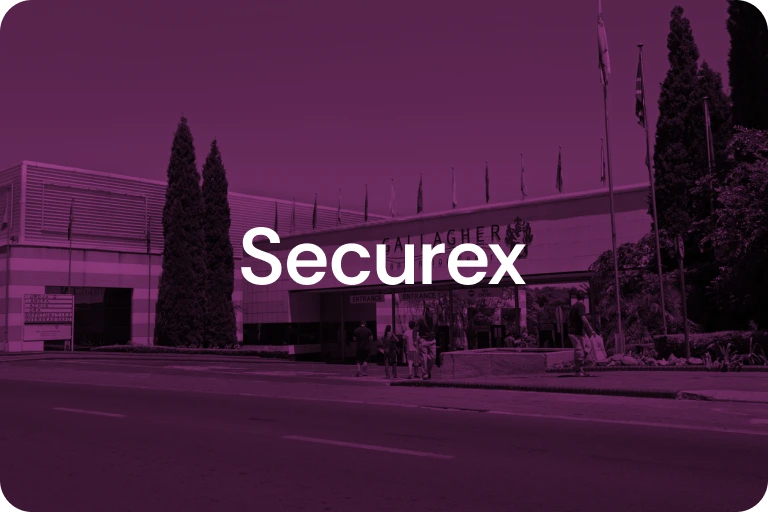
2 - 4 June
Securex 2026
Meet AURA at Securex 2026 in Johannesburg. Experience real-time emergency response technology, book a demo, and connect with the future of security.
South Africa
United Kingdom
•
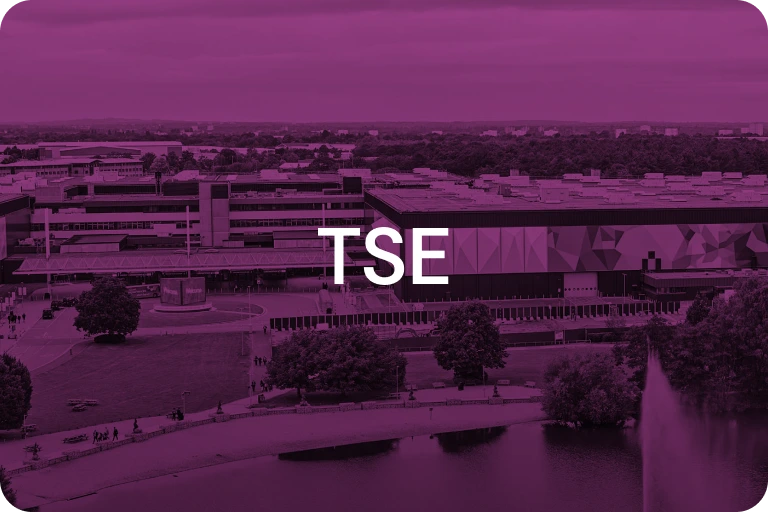
28 - 30 April
The Security Event 2026
The Security Event is the UK's largest commercial security exhibition at the NEC Birmingham; visit AURA at our stand to see how we are transforming nationwide security response.


.webp)
.webp)

.webp)
.webp)
.webp)


.webp)




.svg)
