Most safety systems are designed around the moment something happens. A sensor activates, a panic button is pressed or an integrated device raises an alert.
What happens next is less visible.
Alarm response covers everything that needs to happen between that alert and the incident being resolved: assessing what has happened, identifying an appropriate responder, tracking the response and adjusting the plan if new information comes in.
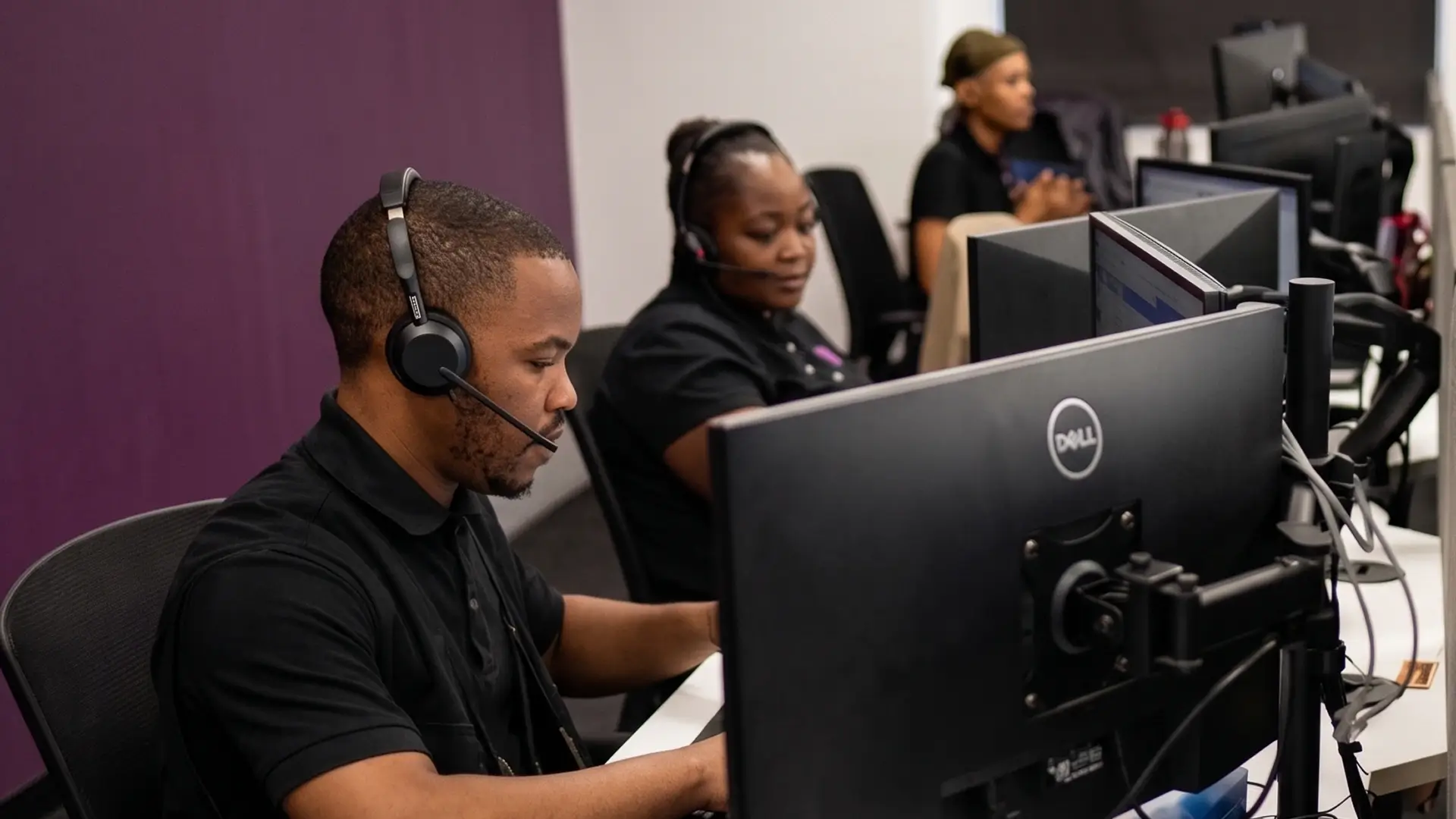
That is the part AURA’s control room manages.
We spoke to Chumile Senene, Global Control Room Manager at AURA, about what happens behind the scenes once an alert reaches the team, what operators can see during a live incident and where technology fits into the process.
What happens when an alarm comes in to the control room?
When an alert reaches the control room, it arrives with the information available for that incident. Depending on the service, this may include the GPS location, relevant profile or medical information and the type of incident.
At the same time, the AURA platform begins identifying an appropriate responder based on proximity, response type and availability.
“The system starts matching a responder at the same moment the alert comes in.” - Chumile Senene, Global Control Room Manager at AURA
The operator can then contact the user to triage the callout and gather any further information that may be needed.
A large part of AURA’s approach to alarm response is reducing the amount of manual coordination required at this stage. Rather than asking an operator to work through responder options one by one, the system handles the matching and routing information in real time.
“The AURA system handles the heavy lifting of matching and routing in real time, cutting out delay and reducing room for human error in those critical first seconds.”
That leaves the operator to concentrate on the incident itself and the people involved.
The scale of that work is considerable. AURA’s control room dashboards recorded more than 325,000 callouts across its markets during 2026.
Keeping the response in view
Once a responder has been dispatched, the control room continues to follow the incident.
“Once dispatched, the control room tracks the responder’s location and live ETA, stays in contact with both the user and the responder, and monitors for any status changes.”
Depending on the service, the user can also see responder responder name, company, vehicle details, live location,, contact details, and an estimated arrival time.
For alarm response, that live view gives operators context while the incident is underway. Operators can see whether a responder has accepted the callout, follow their progress and respond to new information as it comes in.
That becomes especially important when the situation on the ground begins to change.
When the incident changes
The information available at the start of a callout is not always the information the team is working with a few minutes later.
A security incident may develop a medical component. New details may emerge while the responder is already travelling. The situation at the location may turn out to be more serious than initially understood.
“The control room re-assesses in real time.”
Depending on what has changed, the team can update the responder already on the way, add or change responder types, bring in additional services or escalate the incident further.
Different incidents follow different protocols
Medical and security incidents require different skills, responders and escalation paths, so the control room does not treat every alert in the same way.
“Each incident type routes through a tailored protocol.”
Security incidents are routed to an appropriate security responder and can be escalated to the relevant authorities depending on the circumstances.
The operators handling those incidents are trained accordingly.
The technology gives the team a live operational view, but the decisions made from that information still sit with trained people.
From arrival to resolution
Responder arrival is another stage in the process rather than the end of it.
Once on scene, the responder assesses the situation and begins dealing with the incident. For a medical responder, that means beginning on-scene medical assistance. For a security responder, it means assessing what is happening and taking the appropriate action within their role and operating procedures.
The control room remains involved throughout.
“Throughout, the control room stays engaged until the incident is confirmed resolved.”
Across AURA’s markets in 2026 to date, the median true response time was just under 13 minutes, according to the control room dashboard. The incident, however, remains active beyond the responder’s arrival until the outcome has been confirmed.
That distinction is an important one for AURA’s response model. Dispatch is a milestone in the process; resolution is the point at which the team knows what happened.
Building a record of the incident
Every callout also creates a digital record.
“Every incident generates a digital record - timestamps for each stage, responder identity, GPS trail, communications log and outcome.”
That gives customers a record of how the incident progressed and gives AURA’s operations team a body of information it can review afterwards.
A dedicated Quality Assurance & Standards team reviews callouts on an ongoing basis. Where gaps are identified, the findings can be used for remedial training and continuous development.
Chumile describes that as an ongoing process rather than something that ends once an operator has completed their initial training.
Closing the response gap
Detection technology has improved enormously. Sensors, cameras, alarms and connected devices can identify a problem and raise an alert very quickly.
The response still has to be managed.
Someone needs to understand what has happened, identify an appropriate responder, keep track of the incident while help is on the way and change course when new information comes in.
That is the response gap AURA is designed to close. Effective alarm response therefore depends on what happens after detection, not simply how quickly an alert is raised.
Inside the control room, the platform handles much of the matching, routing and live information involved in that process, while trained operators manage the communication, triage and judgement calls around it.
"The aim is to let operators focus on communication and judgment calls rather than logistics.”
That is the work happening behind an alert, from the moment it reaches AURA until the incident is resolved.




.webp)



.webp)



.svg)

.svg)
.svg)
.svg)
.svg)
.svg)